Whether you're trading up, downsizing your fleet, or liquidating a single machine, the first question is always the same: what is my used excavator actually worth? The honest answer is that no two machines price identically — but the value is far from random. A handful of well-understood factors move the number in predictable directions, and once you understand them you can estimate a realistic range before you ever talk to a buyer.
The five factors that set the price
Used excavator pricing comes down to five levers. Get a read on each one and you're most of the way to a defensible number.
1. Age (model year)
Depreciation is steepest in the first few years and then flattens. A machine loses a meaningful chunk of its value the moment it leaves the dealer, but a well-kept 8-year-old excavator can hold a surprising share of its original price. The curve matters more than the raw age: going from year one to year three costs you far more in value than going from year nine to year eleven.
2. Operating hours
Hours are the odometer of the equipment world. Buyers mentally benchmark against roughly 1,000–1,200 hours per year of "normal" use. A machine well under that band reads as low-hour and commands a premium; one well above it gets discounted, because major service events (final drives, hydraulic pumps, undercarriage) draw closer. We break this down in depth in our guide on how operating hours affect resale value.
3. Brand and model
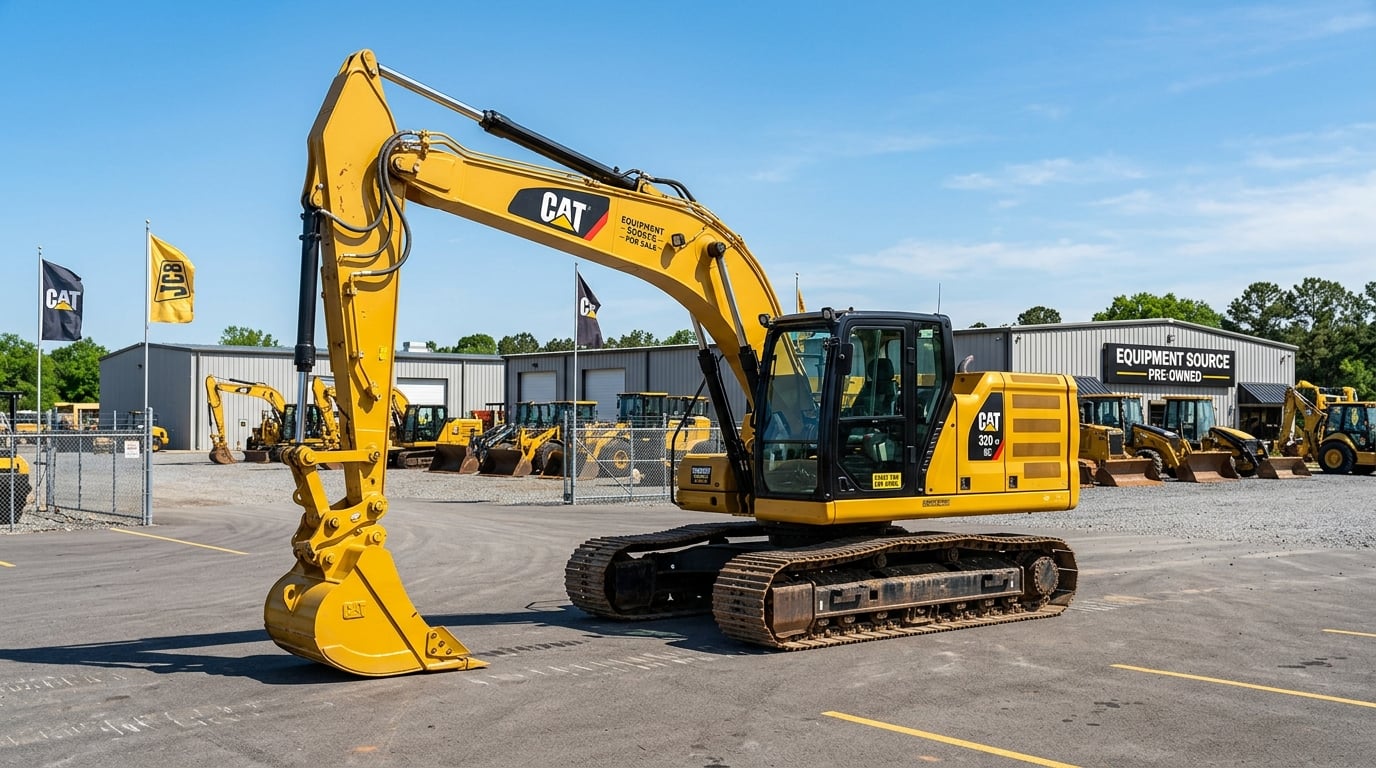
Tier-one brands — Caterpillar, Komatsu, John Deere, Volvo, Hitachi, Case, Kubota in the compact class — retain value better than off-brand iron because parts, dealer support, and buyer confidence are all stronger. Within a brand, popular workhorse models in the 20–36 metric-ton class tend to have the deepest, most liquid resale market.
4. Condition and maintenance history
This is the factor most within your control. Documented service records, clean fluids, tight pins and bushings, healthy undercarriage, and a straight, crack-free boom can swing value by double-digit percentages. A machine that looks cared for signals a machine that was cared for. Our 10-point inspection checklist is exactly what a serious buyer will run — knowing it lets you fix the easy wins first.
5. Attachments, configuration, and market timing
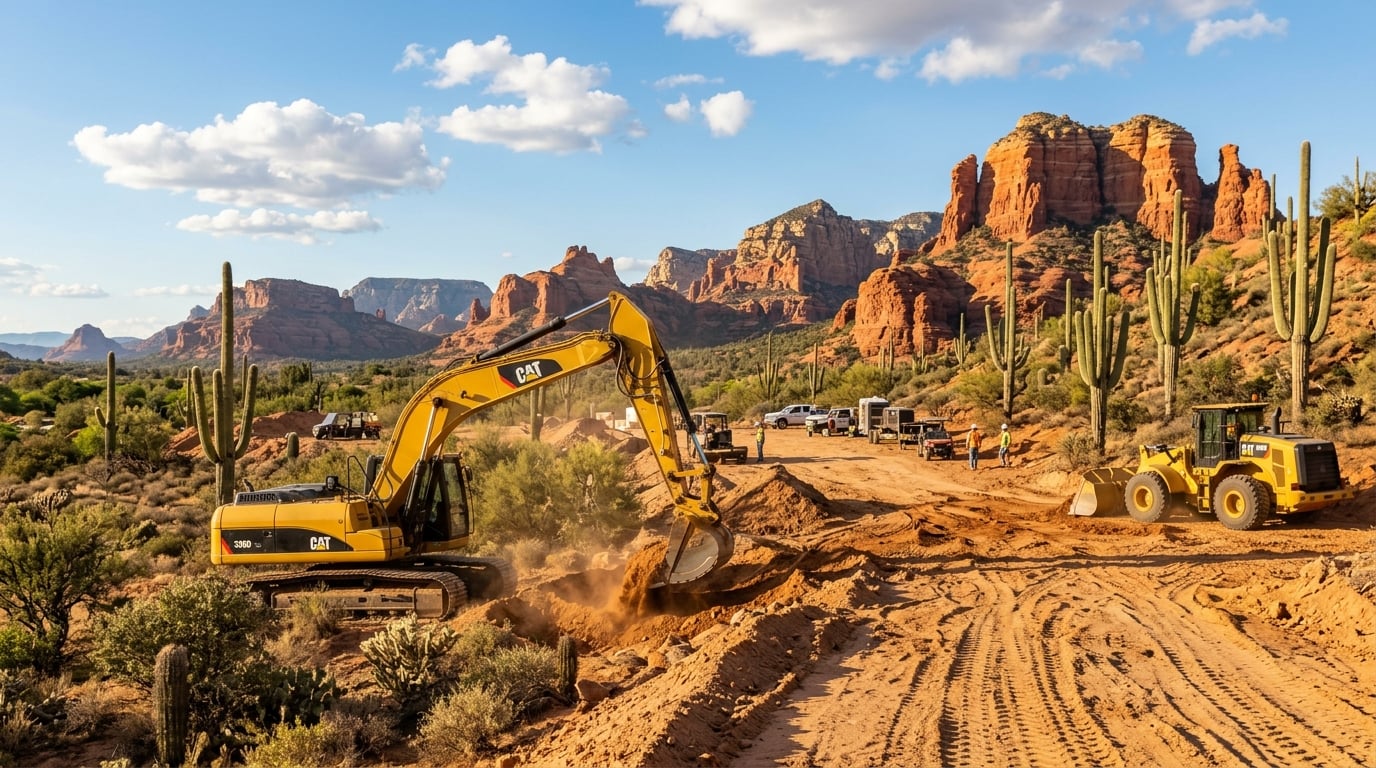
A quick coupler, an extra bucket set, a thumb, or auxiliary hydraulics all add real dollars. Configuration matters too — long-reach and high-flow setups appeal to niche buyers. Finally, timing: demand for earthmoving iron tracks construction and infrastructure cycles, and regional booms (like Arizona's) can lift local prices above the national average.
A simple way to estimate your excavator's value
Here's a practical framework you can run in a few minutes:
- Start with a comparable. Find recent asking prices for the same make/model, similar year, and similar hours. Sold prices are better than asking prices, but asking prices set the ceiling.
- Adjust for hours. Compare your hours to the ~1,100/year benchmark and nudge up or down accordingly.
- Adjust for condition. Be honest. Excellent, straight, well-documented machines sit at the top of the range; tired or undocumented ones near the bottom.
- Add for attachments. Tally the resale value of couplers, buckets, and thumbs separately.
- Sanity-check the range. You should land on a spread, not a single number — buyers negotiate against a range too.
Want a head start? Our free Equipment Value Estimator runs this logic for you in seconds — enter your make, model, year, hours, and condition and get an instant estimated resale range you can use as a baseline.
How to get top dollar when you sell
Once you know your number, a few moves consistently protect it: clean the machine thoroughly, fix the cheap cosmetic and safety items, gather every service record you can find, and photograph it well in good light from all angles including the undercarriage and hour meter. Transparency sells — buyers pay more when they trust what they're looking at.
When you're ready, listing your excavator on EquipMarket is free. You keep control of your price, we put the machine in front of active buyers, and buyer financing helps qualified purchasers close faster — so you get to a sale without leaving money on the table. You only pay when it sells.