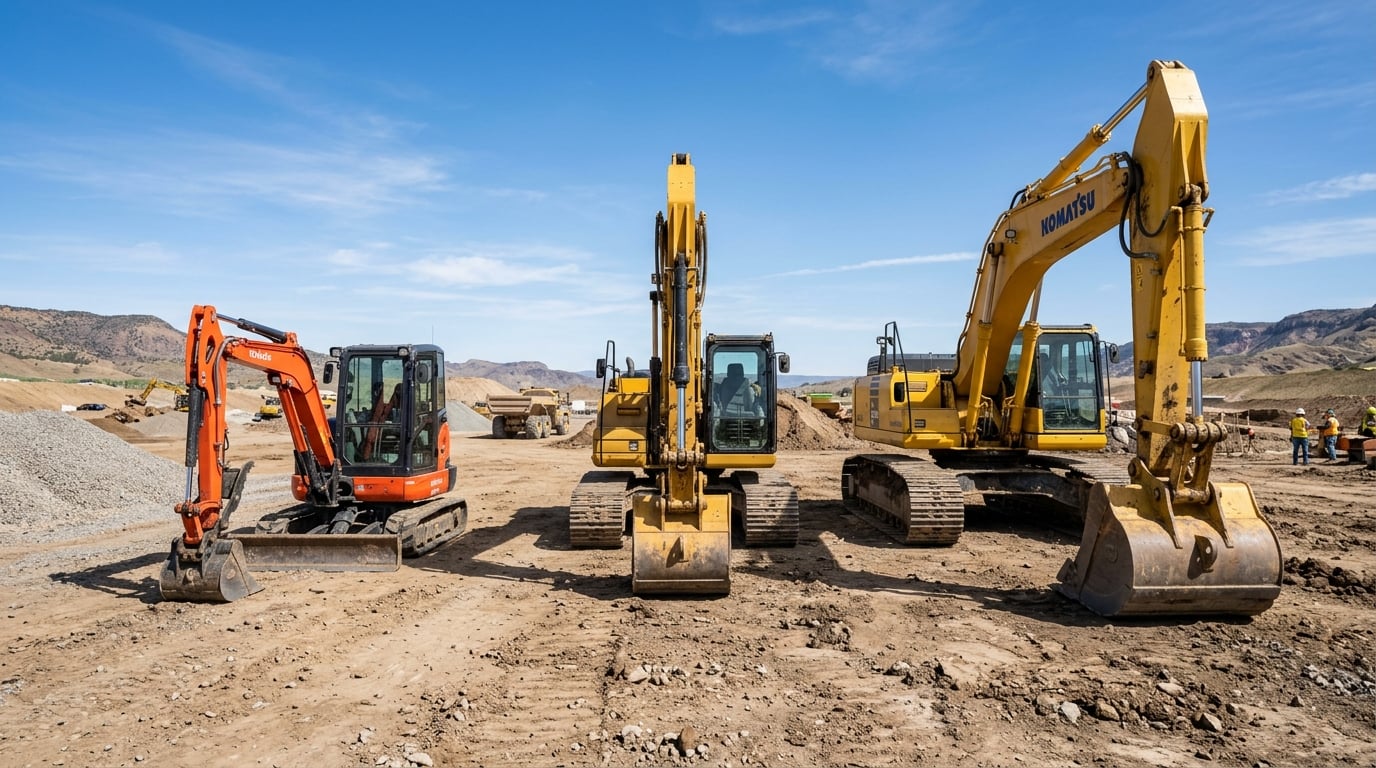
Bobcat has been synonymous with compact equipment since the company introduced the world's first skid steer loader in 1958. Today, Bobcat—now owned by Doosan Bobcat—manufactures a comprehensive lineup of compact construction equipment trusted by contractors, landscapers, farmers, and rental companies across North America. Whether you're trenching utilities, grading a parking lot, or clearing brush, there's likely a Bobcat model designed for the task.
This guide breaks down the major Bobcat equipment categories, explains the model numbering system, and helps you identify which machines best fit your operation. If you're shopping for used Bobcat equipment or considering selling a machine you own, understanding the full lineup will help you make smarter decisions.
Understanding Bobcat's Model Numbering System
Bobcat uses a relatively straightforward numbering system across its equipment lines, though it has evolved over the decades. Here's how to decode what you're looking at:
Skid Steers and Compact Track Loaders
Current Bobcat skid steers use a letter-number format like S450, S550, S650, S770, and S850. The "S" indicates a skid steer, while the numbers generally correlate to size class—higher numbers mean larger machines with greater rated operating capacity. Compact track loaders follow the same pattern but use "T" (T450, T550, T650, T770, T870).
Older Bobcat skid steers used three-digit numbers like 753, 763, 773, 863, and 873. If you're shopping for used skid steers, you'll encounter plenty of these legacy models still working hard on jobsites.
Mini Excavators
Bobcat mini excavators use an "E" prefix followed by numbers indicating approximate operating weight in metric tons. For example, the E35 weighs roughly 3.5 metric tons, while the E85 tips the scales around 8.5 metric tons. The R-Series and R2-Series designations indicate generation updates with improved features and performance.
Other Equipment Lines
Bobcat uses similar logical naming across its product range: "L" for loaders (articulated loaders), "V" for VersaHANDLER telehandlers, and specific designations for utility vehicles, mowers, and attachments.
Bobcat Skid Steer Loader Models
Bobcat essentially invented the skid steer category, and the company remains one of the top manufacturers in this segment. Current skid steer models span from compact machines ideal for tight residential work to powerful units capable of handling heavy material and large attachments.
Small Frame Skid Steers: S450 and S510
The S450 represents Bobcat's entry point for new skid steers, with a rated operating capacity typically around 1,300 pounds and an operating weight under 5,000 pounds. This size works well for landscaping, light grading, and work in confined spaces where larger machines can't maneuver.
The S510 steps up slightly in capacity (around 1,750 pounds ROC) while maintaining a compact footprint. Both models commonly feature Bobcat's smaller diesel engines in the 46-49 horsepower range.
Medium Frame Skid Steers: S550, S590, S630, and S650
This is where most contractors find their sweet spot. The S550 through S650 range offers rated operating capacities from roughly 1,800 to 2,700 pounds, with engine options typically between 60 and 74 horsepower.
The S590 and S650 are particularly popular choices for general contracting work. They're large enough to handle most attachments effectively—including augers, trenchers, and grapples—while still fitting through standard gates and working in semi-confined areas.
Large Frame Skid Steers: S740, S770, and S850
When you need serious lifting power and hydraulic flow for demanding attachments, the large frame models deliver. The S770 offers a rated operating capacity around 3,350 pounds with approximately 92 horsepower, making it a favorite for heavy landscaping, demolition support, and agricultural applications.
The S850 sits at the top of the skid steer lineup with capacities exceeding 3,950 pounds and horsepower in the mid-90s. These machines command premium prices but offer the performance needed for high-production applications.
Bobcat Compact Track Loaders
Compact track loaders (CTLs) share the same basic design as skid steers but ride on rubber tracks instead of wheels. This gives them superior flotation on soft ground, better traction on slopes, and reduced ground pressure—important considerations for landscaping, utility work, and jobs on finished surfaces.
Small and Medium Track Loaders: T450 through T650
The T450, T550, T590, T630, and T650 mirror their skid steer counterparts in terms of capacity and power. The T590 and T650 are especially popular with landscapers and utility contractors who frequently work on lawns, in muddy conditions, or on slopes where wheeled machines struggle for traction.
Large Track Loaders: T740, T770, and T870
The T770 is arguably Bobcat's most popular large compact track loader, offering the power and capacity for serious production work while maintaining the maneuverability that defines the compact equipment category. The T870 provides even more muscle for contractors who need maximum performance from a CTL platform.
If you're comparing Bobcat track loaders to competitors or considering whether a CTL makes sense over a skid steer, the decision often comes down to your typical working conditions. Track loaders cost more upfront and have higher undercarriage maintenance costs, but they excel in soft or uneven terrain.
Bobcat Mini Excavator Models
Bobcat's mini excavator lineup has expanded significantly over the years, now covering everything from micro machines that fit through doorways to midi excavators that compete with larger conventional excavators for certain applications. You can browse excavator listings to see what's currently available on the market.
Micro and Mini Class: E10, E20, E32, and E35
The E10 is Bobcat's smallest excavator, weighing under 2,600 pounds and narrow enough to fit through standard doorways. It's designed for indoor demolition, tight urban sites, and applications where larger equipment simply cannot access.
The E20 and E32 step up in capability while remaining true compact machines. The E35 (approximately 7,600 pounds operating weight) is one of Bobcat's most popular models, offering enough dig depth and breakout force for serious trenching and foundation work while still being towable with a standard pickup truck and trailer.
Mid-Size Mini Excavators: E42, E50, and E55
These models bridge the gap between compact convenience and production-level performance. The E50 and E55 typically weigh between 11,000 and 12,500 pounds, with dig depths around 12 to 13 feet. They're popular choices for utility contractors, residential builders, and landscaping companies that need more capability than the smallest minis provide.
The E55 features a conventional tail swing design, while other models in this range offer minimal or zero tail swing configurations—an important consideration when working near walls, fences, or traffic.
Larger Mini Excavators: E60, E85, and E88
Bobcat's larger mini excavators push into territory that was once dominated by conventional excavators. The E85 and E88 weigh approximately 18,000 to 19,500 pounds and offer dig depths exceeding 15 feet. These machines handle commercial site work, deeper utility installation, and applications requiring more reach and power than smaller minis can deliver.
For contractors deciding between excavator sizes, our excavator size guide can help you match machine capability to job requirements.
Bobcat Articulated Loaders
Bobcat's articulated loader lineup (L23, L28, and L85) offers an alternative to skid steers for certain applications. These machines steer by articulating in the middle rather than skidding their tires, which reduces turf damage and tire wear while providing a tighter turning radius than conventional wheel loaders.
The L23 and L28 are compact units popular with landscapers and small farms, while the L85 provides more capacity for heavier material handling. If you're comparing these to wheel loaders, articulated loaders generally offer better maneuverability in tight spaces but less capacity than similarly-priced conventional loaders.
Bobcat Telehandlers (VersaHANDLER)
Bobcat's VersaHANDLER telehandlers combine the reach of a forklift with the versatility of a loader. Models like the V519, V723, and VR519 offer varying combinations of lift height and capacity, typically ranging from 5,500 to 7,000+ pound capacities with lift heights from 19 to 42 feet depending on the model.
These machines are particularly valuable for roofing contractors, masons, and builders who need to place materials at height. The rotating models (VR series) add 360-degree rotation capability for even greater flexibility.
Bobcat Utility Vehicles and Mowers
Beyond construction equipment, Bobcat manufactures utility vehicles (UV34 series) and zero-turn mowers. While these aren't typically the focus for heavy equipment buyers, they round out Bobcat's offering for property maintenance, farming, and grounds care applications.
Bobcat Attachments: Multiplying Your Machine's Capability
One of Bobcat's greatest strengths is its extensive attachment lineup. With the right attachments, a single skid steer or track loader becomes a trencher, auger, brush cutter, concrete mixer, snow blower, or dozens of other specialized tools.
Common Bobcat attachments include:
- Buckets – General purpose, dirt, grading, and skeleton buckets in various widths
- Augers – For post holes, tree planting, and foundation piers
- Trenchers – Chain and wheel trenchers for utility installation
- Breakers – Hydraulic hammers for concrete and rock demolition
- Grapples – Root grapples, industrial grapples, and log grapples
- Brushcutters and Mowers – For land clearing and vegetation management
- Snow Equipment – Blades, pushers, blowers, and brooms
- Pallet Forks – For material handling and loading
When buying used Bobcat equipment, verify which attachments are included and confirm compatibility. Bobcat uses the Bob-Tach mounting system on most machines, but hydraulic flow requirements vary by model—not every attachment works optimally on every machine.
Buying Used Bobcat Equipment: What to Consider
Bobcat equipment holds its value reasonably well, particularly popular models like the S650, T770, and E35. When shopping for used Bobcat machines, consider these factors:
Hours and Age
Skid steers and track loaders typically see 200-400 hours annually in moderate commercial use, though rental units may accumulate hours faster. Mini excavators often run 150-300 hours per year for owner-operators. Machines with hours significantly above or below these ranges warrant closer inspection—very low hours might indicate sitting idle (potential issues), while very high hours suggest heavy use.
Undercarriage Condition (Track Loaders and Excavators)
Undercarriage components represent a significant maintenance expense on tracked machines. Inspect track tension, roller condition, sprocket wear, and idler condition. Replacement costs can run several thousand dollars, so factor this into your purchase decision.
Hydraulic System
Check for leaks at cylinders, hoses, and fittings. Operate all functions and listen for unusual noises. Sluggish hydraulics or overheating can indicate pump wear or contamination issues.
Loader Arms and Pivot Points
On skid steers and track loaders, check for excessive play in loader arm pivots and the Bob-Tach coupler. Worn bushings and pins are common on high-hour machines and affect attachment security and operation.
If you're unsure what a particular Bobcat model is worth, our free equipment valuation tool can help you establish fair market value before buying or selling.
Bobcat vs. Competitors: Where Bobcat Stands
Bobcat competes with John Deere, Caterpillar, Kubota, Case, New Holland, and others in the compact equipment space. Bobcat's strengths typically include:
- Attachment ecosystem – One of the largest attachment selections available
- Dealer network – Extensive North American dealer coverage
- Resale value – Strong brand recognition supports used values
- Parts availability – Widespread parts distribution for common models
Potential considerations include:
- Price point – Bobcat machines sometimes carry premium pricing compared to some competitors
- Engine options – Some contractors prefer specific engine brands offered by competitors
For contractors comparing brands, the best choice often depends on local dealer support, specific model features, and your existing equipment fleet. If you already run Bobcat equipment, staying within the brand simplifies training and parts inventory.
Common Bobcat Applications by Industry
Landscaping and Hardscaping
Skid steers (S550-S650 range) and compact track loaders (T590-T650) dominate landscaping applications. Paired with buckets, augers, trenchers, and grapples, these machines handle grading, planting, hardscape installation, and debris removal efficiently.
Utility and Underground Construction
Mini excavators (E35-E55 range) combined with track loaders provide the trenching, digging, and backfilling capability utility contractors need. The compact size allows work in established neighborhoods and tight urban environments.
General Contracting and Site Work
Larger skid steers, track loaders, and mini excavators handle site preparation, foundation excavation, material handling, and cleanup. Many contractors run a track loader and mini excavator as their core equipment pair.
Agriculture and Farming
Bobcat equipment works well for feeding operations, barn cleaning, fence building, and general farm maintenance. The attachment versatility makes these machines valuable year-round tools.
Find Your Next Bobcat on EquipMarket
Whether you're looking to add a Bobcat skid steer, track loader, or mini excavator to your fleet—or ready to sell equipment you've outgrown—EquipMarket connects contractors and dealers across the United States. Browse current heavy equipment listings to see what's available, or list your equipment for sale to reach serious buyers. Our marketplace is built specifically for the construction industry, making it easy to find the right machine at the right price.