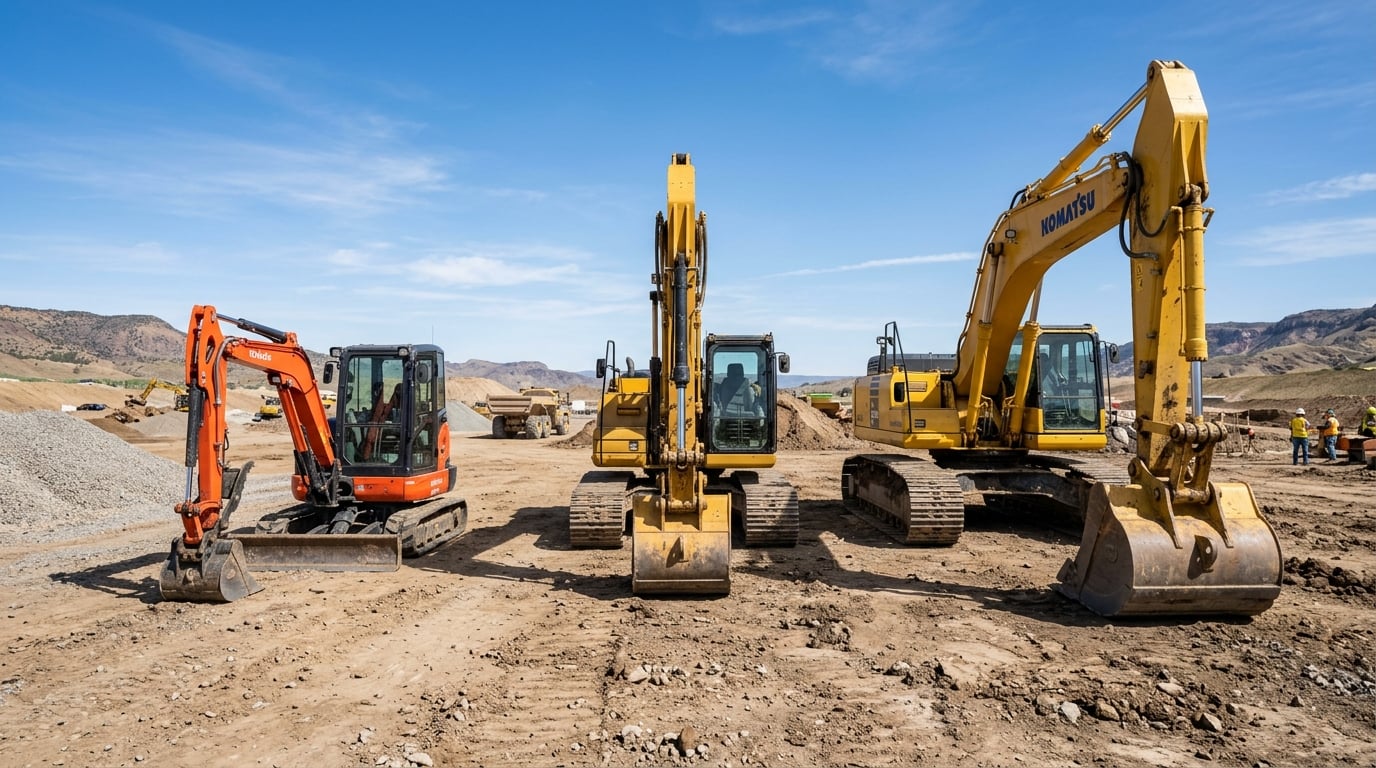
John Deere has built a reputation for durability and dealer support that extends well beyond agricultural equipment. For contractors seeking excavators that deliver consistent performance with excellent parts availability across the United States, Deere's E-Series lineup offers compelling options from compact machines to full-size production excavators. Understanding what each model brings to the table helps you match the right excavator to your specific applications—whether you're running a landscaping crew, managing utility installations, or tackling large-scale earthmoving projects.
This guide covers the complete John Deere excavator lineup currently available in North America, breaking down the specifications, ideal applications, and key features that distinguish each class and model. If you're comparing brands, you might also want to review our Komatsu excavator models guide or Caterpillar excavator lineup guide for a complete market picture.
Understanding John Deere's Excavator Naming System
Before diving into specific models, it helps to understand how John Deere names its excavators. The naming convention follows a straightforward pattern that tells you a lot about each machine at a glance.
The number in the model name generally corresponds to the machine's operating weight class. For example, a 35G weighs approximately 3.5 metric tons, while a 350G operates in the 35-metric-ton class. The letter suffix indicates the generation or series—current production models typically carry the "G" designation for the latest generation of E-Series machines.
You'll also see designations like "P" for reduced tail swing (Performance) configurations and "D" for certain compact models. These variations help contractors select machines optimized for specific working conditions, particularly in confined spaces where standard tail swing would be problematic.
Compact Excavators: The G-Series Lineup
John Deere's compact excavator range addresses the needs of landscapers, utility contractors, and general contractors who need maneuverability without sacrificing digging capability. These machines typically weigh under 10 metric tons and fit through standard gates, work in residential areas, and transport easily on trailers.
17G and 26G: Ultra-Compact Class
The 17G represents John Deere's entry point in the excavator market, weighing approximately 1.7 metric tons. This machine excels in tight residential work, interior demolition preparation, and landscaping projects where larger equipment simply won't fit. With a retractable undercarriage option, the 17G can narrow its track width to pass through standard doorways and gates.
The 26G steps up to roughly 2.6 metric tons, offering increased dig depth and breakout force while maintaining excellent transportability. Both models feature Yanmar diesel engines known for fuel efficiency and reliability. Contractors typically choose these machines for irrigation work, small foundation excavation, and detailed grading around structures.
30G and 35G: Versatile Mid-Compact Class
Moving into the 3-ton class, the 30G and 35G represent what many contractors consider the sweet spot for compact excavators. These machines offer enough power for serious digging while remaining trailer-friendly and maneuverable on congested jobsites.
The 35G, in particular, has earned a strong following among utility contractors and residential builders. With dig depths commonly reaching around 10 feet and bucket breakout forces suitable for most soil conditions, this class handles everything from footings to utility trenching efficiently. The 35G also comes in a reduced tail swing configuration (35P) for work alongside structures or in road right-of-ways where swing clearance matters.
50G and 60G: Large Compact Class
The 50G and 60G bridge the gap between compact and mid-size excavators. Weighing approximately 5 and 6 metric tons respectively, these machines deliver substantially more dig depth and lifting capacity than their smaller siblings while still fitting the compact excavator category.
Contractors running these machines typically handle commercial site prep, larger utility installations, and light demolition work. The 60G, with its Final Tier 4 diesel engine, provides the muscle for loading trucks efficiently while maintaining the compact footprint needed for urban work. If you're trying to determine which size class fits your typical projects, our excavator size guide breaks down the decision factors in detail.
75G and 85G: Compact-to-Mid Transition
The 75G and 85G occupy an interesting position in the lineup, offering mid-size excavator capabilities in relatively compact packages. These machines typically weigh between 7.5 and 8.5 metric tons and provide dig depths approaching 15 feet on standard configurations.
For contractors who need more reach and power but still value transportability, these models often hit the mark. They're commonly found on municipal projects, subdivision development, and commercial construction where the work demands more than a true compact but doesn't justify a full production excavator.
Mid-Size Excavators: Production-Ready Performance
John Deere's mid-size excavators step into serious production territory. These machines handle the bulk of commercial and infrastructure excavation work, offering the dig depth, reach, and cycle times that keep projects on schedule.
130G: Entry Production Class
The 130G marks the transition into John Deere's production excavator range. At approximately 13 metric tons operating weight, this machine delivers dig depths commonly exceeding 18 feet and the hydraulic flow to run a variety of attachments efficiently.
Contractors appreciate the 130G for its balance of capability and operating costs. It's large enough for production trenching, basement excavation, and site development but doesn't carry the fuel consumption and transport logistics of larger machines. The cab offers improved visibility and operator comfort features that matter during long shifts.
160G LC: Versatile Mid-Size Workhorse
The 160G LC (Long Carriage) represents one of John Deere's most popular mid-size offerings. Weighing approximately 17 metric tons, this excavator provides the reach and power for serious earthmoving while remaining versatile enough for varied applications.
With dig depths typically around 21 feet and substantial bucket capacities, the 160G LC handles production digging, pond construction, and commercial site work efficiently. The "LC" designation indicates the longer undercarriage that improves stability and lifting capacity—an important consideration when loading trucks or working on slopes.
180G LC: Enhanced Mid-Size Performance
Stepping up to approximately 18 metric tons, the 180G LC adds incremental improvements in dig depth, reach, and lifting capacity over the 160G. For contractors who find the 160G slightly undersized for their typical work but don't need to jump to the 200-class, the 180G LC fills that gap effectively.
This model commonly appears on highway projects, large commercial developments, and infrastructure work where consistent production matters. The additional weight and hydraulic capacity also make it better suited for running larger hydraulic attachments like hammers and compactors.
Large Excavators: Heavy Production Class
John Deere's large excavator lineup competes directly with production machines from Caterpillar, Komatsu, and other major manufacturers. These excavators tackle the demanding work of mass excavation, quarry operations, and major infrastructure projects.
210G LC: Popular Production Choice
The 210G LC sits in the 20-21 metric ton class that represents one of the highest-volume segments in the excavator market. This size class offers an excellent balance of production capability, transportability, and operating efficiency that suits a wide range of contractors.
With dig depths commonly reaching 22-23 feet and bucket capacities suited for efficient truck loading, the 210G LC handles everything from subdivision mass grading to commercial foundation excavation. John Deere equips this model with their PowerTech diesel engine and advanced hydraulic systems designed for responsive, efficient operation.
245G LC: Stepping Up Production
The 245G LC moves into the 24-25 metric ton range, offering increased dig depth, reach, and bucket capacity over the 210G. Contractors running larger-scale earthmoving operations often find this size class hits the productivity targets their projects demand.
This model commonly works on highway construction, large commercial sites, and mining support operations. The additional weight and power translate to faster cycle times when loading articulated trucks and better performance in tough digging conditions.
300G LC: Heavy-Duty Production
At approximately 30 metric tons, the 300G LC enters heavy production territory. This excavator class handles the demanding work of quarry operations, major infrastructure projects, and large-scale site development where moving maximum material matters.
The 300G LC features John Deere's commitment to operator comfort with a spacious cab, excellent visibility, and controls designed for all-day productivity. The hydraulic system delivers the flow and pressure needed for large buckets and demanding attachment work.
350G LC: Top of the Line
The 350G LC represents John Deere's largest standard production excavator in the North American market. Operating in the 35-36 metric ton class, this machine tackles the heaviest excavation work with dig depths commonly exceeding 24 feet and bucket capacities that make quick work of truck loading.
Contractors running 350G LC excavators typically work on major highway projects, large mining operations, and significant infrastructure development. The machine's size demands careful transport planning but delivers the production rates that keep large projects on schedule.
Key Features Across the E-Series Lineup
Several features distinguish John Deere excavators across the lineup and contribute to their reputation among contractors.
JDLink Telematics
John Deere's JDLink system provides remote monitoring capabilities that help fleet managers track machine location, operating hours, fuel consumption, and diagnostic codes. This connectivity supports preventive maintenance scheduling and helps identify issues before they become costly problems.
Grade Guidance and Control
Many E-Series models come grade-ready or equipped with John Deere's SmartGrade technology. These systems range from basic 2D guidance to full 3D GPS machine control, helping operators achieve grade specifications more efficiently with less rework.
Dealer Network Support
One of John Deere's strongest selling points remains their extensive dealer network across the United States. Parts availability and service support often prove critical for contractors who can't afford extended downtime. Deere dealers typically maintain substantial parts inventories and employ factory-trained technicians.
Attachment Versatility
The E-Series lineup supports a wide range of hydraulic attachments through standardized quick-coupler systems and auxiliary hydraulic circuits. From hammers and thumbs to augers and compactors, these machines adapt to varied applications with appropriate attachment packages.
Choosing the Right John Deere Excavator
Selecting the appropriate excavator model depends on several factors specific to your operation and typical projects.
Consider Your Primary Applications
Match the machine size to your most common work. Contractors who primarily handle residential and light commercial projects often find the 35G-85G range covers most needs efficiently. Those focused on production earthmoving typically start looking at the 160G and larger.
Evaluate Transport Requirements
Machines under approximately 10 metric tons typically transport on standard trailers without overweight permits. Larger excavators require lowboy trailers and potentially permits depending on your state's regulations. If you move equipment frequently, transport logistics factor significantly into the right size choice.
Factor in Attachment Needs
If you regularly run hydraulic attachments like hammers, the excavator's auxiliary hydraulic capacity matters. Larger attachments demand more flow and pressure than some compact models provide efficiently. Discuss your attachment plans with your dealer to ensure the excavator you're considering delivers adequate hydraulic performance.
Assess Resale Considerations
John Deere excavators generally hold their value well in the used equipment market, particularly popular models like the 35G and 210G LC. When you're ready to understand what your current excavator might be worth, our free equipment valuation tool provides market-based estimates to help with planning.
Buying Used John Deere Excavators
The used market offers opportunities to acquire John Deere excavators at significant savings compared to new machine prices. However, buying used requires careful evaluation to avoid costly surprises.
What to Look For
When evaluating a used Deere excavator, pay attention to the undercarriage condition, hydraulic system performance, and structural integrity. Check for leaks, unusual noises, and sluggish operation that might indicate wear or deferred maintenance. Review available maintenance records and JDLink history if accessible.
Common Model Years to Consider
The current G-Series models began production in the mid-2010s, so well-maintained machines from 2016-2020 often represent good value in the used market. Earlier E-Series models (prior to the G designation) remain serviceable but may lack some current features and face longer-term parts availability questions.
You can browse available excavator listings on EquipMarket to see current market offerings and pricing trends for various John Deere models.
John Deere vs. Competitors
John Deere excavators compete directly with offerings from Caterpillar, Komatsu, Hitachi, and Kobelco. Each brand brings particular strengths to the table.
Deere's advantages typically include their dealer network density, parts availability, and reputation for durability. The brand also benefits from strong residual values in many markets. Some contractors prefer Deere's control feel and cab layout, though this remains highly subjective.
Competitors may offer advantages in specific areas—Komatsu's fuel efficiency technology, Caterpillar's technology integration, or Hitachi's hydraulic responsiveness, for example. The best choice often depends on your local dealer support, existing fleet composition, and specific application requirements.
Find Your Next John Deere Excavator
Whether you're adding capacity to your fleet or replacing aging equipment, understanding the complete John Deere excavator lineup helps you make informed decisions. From the nimble 17G to the powerful 350G LC, Deere offers options for virtually every excavation application contractors encounter.
Ready to find your next excavator? Browse current heavy equipment listings on EquipMarket to see available John Deere models from dealers and contractors across the country. If you have equipment to move, list your excavator for sale and connect with qualified buyers looking for exactly what you're offering. EquipMarket makes it simple to buy and sell heavy equipment with confidence.