Why Dallas Is One of the Hottest Used Equipment Markets in the U.S.
Dallas–Fort Worth (DFW) is no longer just Texas's financial capital — it's the epicenter of a sustained construction boom that shows no sign of slowing. In 2025 alone, the Dallas MSA issued more than $14.2 billion in building permits, trailing only New York City and Los Angeles. Corporate relocations (Goldman Sachs, Charles Schwab, Caterpillar Financial, CBRE), infrastructure projects along US-75, I-635, and SH-183, and a relentless wave of data-center, industrial, and multifamily development are keeping equipment demand sky-high.
For contractors, owner-operators, and fleet managers looking to buy used heavy equipment in Dallas, that demand cuts both ways: there's an abundant supply of iron cycling through the market as fleets refresh, but well-priced units move fast. This guide walks you through the Dallas used equipment landscape — where to find machines, what to pay, what to inspect, and how to finance a purchase so you don't lose the deal.
What Types of Equipment Move Most in Dallas
Dallas construction is extraordinarily diverse, which means demand is spread across categories rather than concentrated in a single machine type:
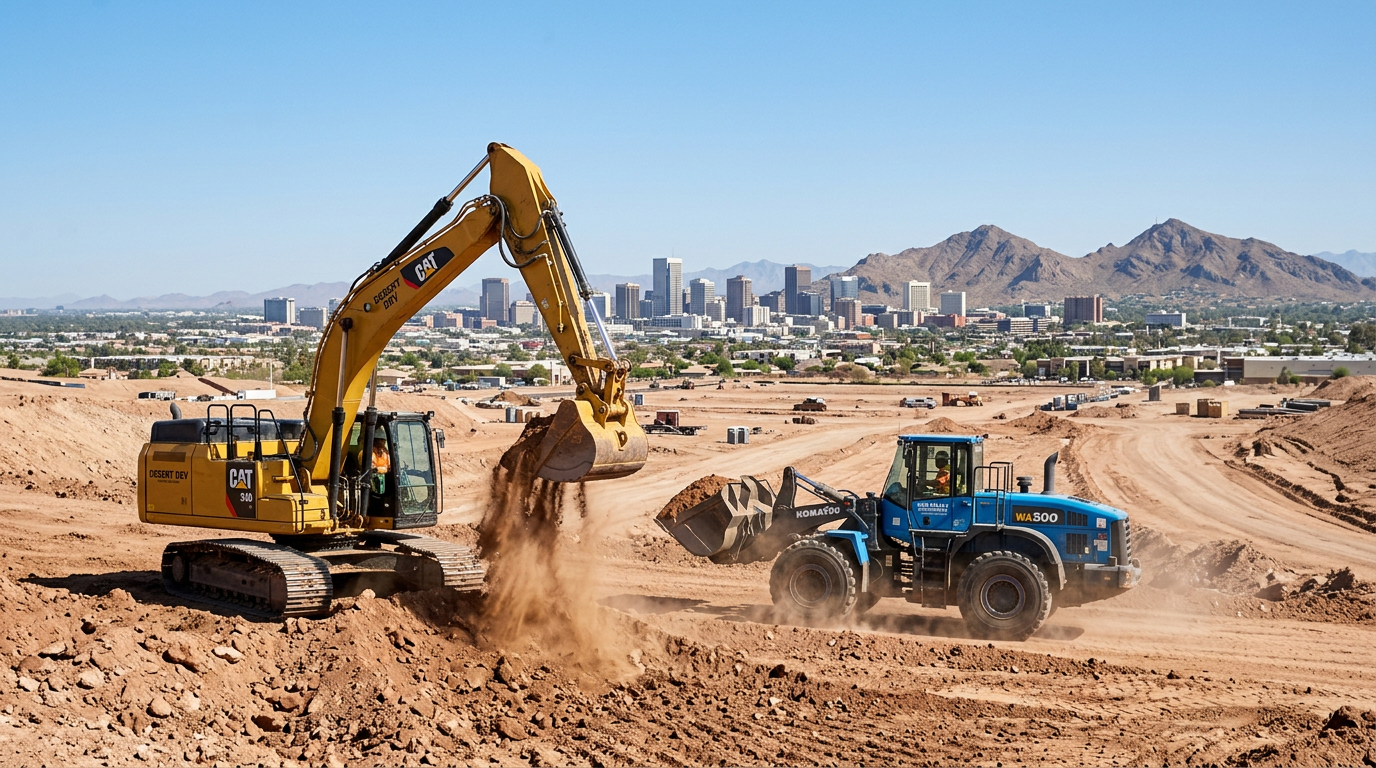
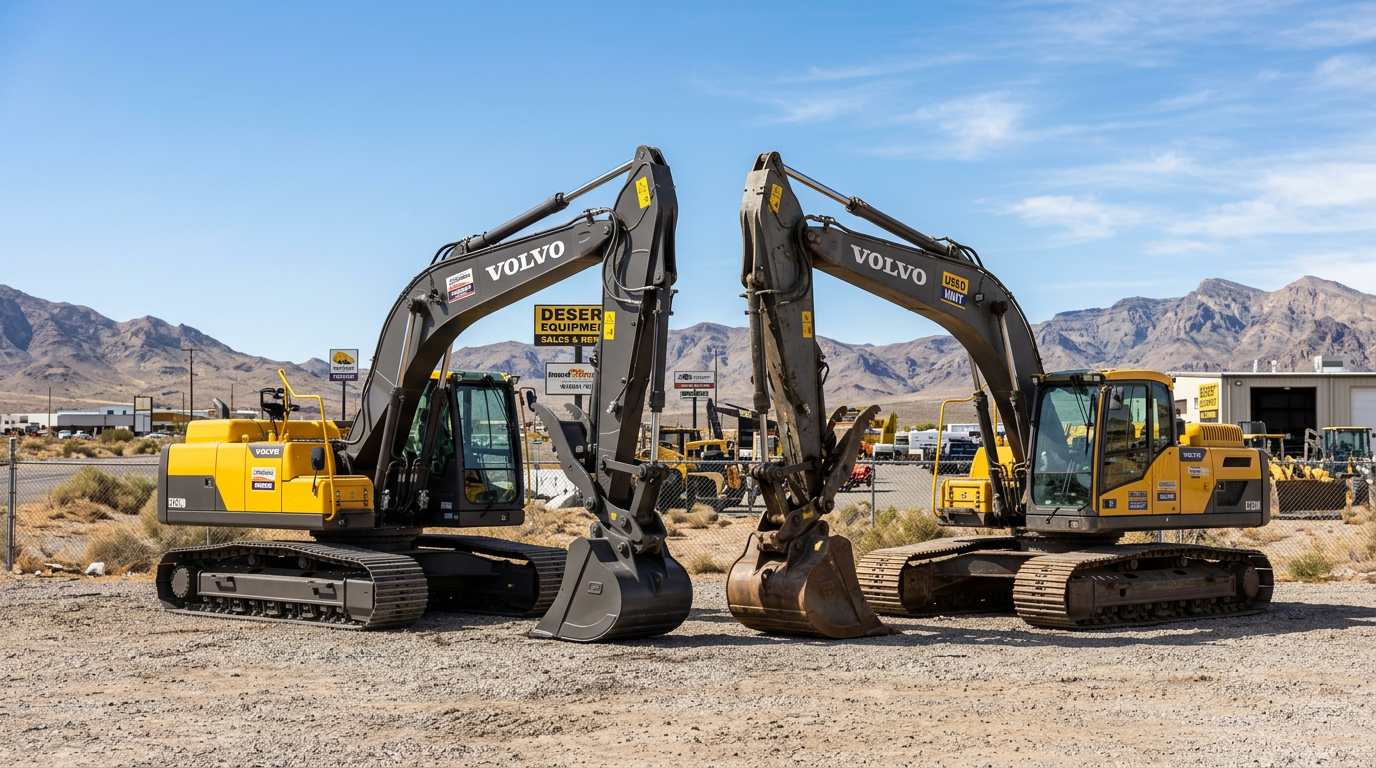
- Excavators (20–35 ton class) — The dominant machine on commercial foundation and utility work. CAT 320/323, Komatsu PC210/PC290, Volvo EC220/EC250, and Deere 210G are the most common. Expect prices of $80,000–$175,000 for units under 10,000 hours in good condition.
- Mini excavators (1–6 ton) — Huge demand for residential infill, utility trenching, and the exploding smart-home and pool-excavation market in Frisco, McKinney, Celina, and Prosper. Kubota KX040/KX080, Bobcat E35/E50, and CAT 305/308 are popular. Prices: $25,000–$65,000.
- Skid steers and compact track loaders — Favored on smaller commercial pads and residential lots. Bobcat T650, CAT 299D3, and Deere 333G dominate. Track loaders command a $5,000–$15,000 premium over wheeled skid steers in comparable condition.
- Wheel loaders — Heavy use in concrete/masonry and materials handling. CAT 938/950, Komatsu WA320/WA380, and Volvo L90/L110 are frequently traded. Condition-dependent pricing: $55,000–$130,000.
- Dozers — Site prep on Dallas's massive industrial parks (AllianceTexas, DFW Industrial) keeps dozer demand high. CAT D6, D7, Komatsu D61/D65. Undercarriage condition is the make-or-break factor.
- Rough-terrain forklifts and telehandlers — The framing/tilt-wall construction boom means JLG, SkyTrak, and Manitou telehandlers are in constant demand, especially 6,000–10,000 lb capacity units at 40–56 ft reach.
Where to Find Used Heavy Equipment in Dallas
Online Marketplaces
The easiest starting point is a targeted search on platforms that aggregate both dealer and private-party inventory:
- EquipMarket.org — Browse used excavators, dozers, skid steers, and wheel loaders listed by Texas sellers. Private-party listings often price 10–20% below dealer retail, and the platform supports financing on qualifying machines.
- IronPlanet / Ritchie Bros. — Weekly online auctions draw significant DFW fleet liquidations. Useful for price benchmarking even if you don't buy at auction.
- MachineryTrader and Equipment Trader — National dealer networks with heavy DFW representation.
Local Dealers and Auctions
Dallas has a deep dealer ecosystem. Major Cat and Komatsu dealers (Holt Cat, Warren Cat, Kirby-Smith Machinery) carry certified pre-owned iron with warranty options. Independent dealers in Garland, Mesquite, Grand Prairie, and Waxahachie often have good pricing on off-brand and older units. Live auctions happen frequently at the DFW Airport industrial corridor and at permanent auction yards along I-35E.
Private Sellers
Fleet managers at GC firms, pipeline subcontractors, and concrete companies frequently sell units directly. Check local Facebook groups ("DFW Construction Equipment Buy/Sell"), Craigslist's "heavy equipment" section, and industry forums. Private pricing is often the best, but due diligence is entirely on you — no warranty, no financing pre-arranged. See our guide to buying from a private seller safely.
Dallas Market Pricing: What to Expect in 2026
Used equipment values in the DFW market reflect national trends tempered by regional supply dynamics. After the 2021–2023 post-COVID price spike, values have moderated in most categories — but not crashed. Key pricing benchmarks for Dallas as of mid-2026:
- CAT 320 (2018–2021, 6,000–9,000 hrs, good condition): $110,000–$145,000
- Komatsu PC210 (2017–2020, 7,000–10,000 hrs): $95,000–$125,000
- Bobcat T650 CTL (2019–2022, <3,000 hrs): $42,000–$58,000
- CAT D6T (2015–2019, 6,000–9,000 hrs, 60–70% undercarriage): $105,000–$150,000
- Kubota KX080-4 mini excavator (2018–2021, <3,000 hrs): $44,000–$60,000
- Komatsu WA380 wheel loader (2016–2020, 7,000–10,000 hrs): $75,000–$100,000
Use these ranges as a starting point, then adjust based on hours, condition score, attachment package, and recent service history. Get a professional appraisal or check our free valuation tool before making an offer.
What to Inspect Before You Buy in Dallas
North Texas conditions create specific wear patterns you need to look for:
Hydraulic System — High Priority in Texas Heat
Dallas summers regularly hit 105°F+. Equipment running through July and August puts extreme thermal stress on hydraulic fluid, seals, and cylinders. Always check for weeping cylinder rods, milky fluid (water contamination), slow or jerky boom/bucket response, and overheating warning light history in the ECM log. A full hydraulic oil analysis costs about $35 and can save you from a $15,000–$40,000 hydraulic pump rebuild.
Undercarriage — Clay and Caliche Wear
DFW soils are a mix of Blackland Prairie clay (extremely sticky when wet, like concrete when dry) and caliche hardpan further west. Both accelerate undercarriage wear — particularly on track links and idlers — because clay packs and caliche acts as an abrasive. Measure remaining track pad thickness (minimum 25mm for productive use) and check sprocket tooth sharpness. Budget $15,000–$35,000 for a full undercarriage replacement on a 20-ton excavator if it's worn below 30%.
Engine — Diesel Particulate Filter Status
Tier IV Final machines (most 2014+ equipment) have diesel particulate filters (DPF) that require active regeneration. In stop-and-go urban site conditions common in Dallas, DPFs can clog prematurely. Pull the ECM fault history and ask for DPF regeneration logs. A DPF replacement runs $5,000–$12,000 depending on the machine.
Structural / Frame Cracks
High-cycle commercial work in Dallas (short dig cycles, frequent swings, truck-loading applications) creates fatigue stress at boom foot pins, stick pivot welds, and counterweight mounting points. Inspect these areas carefully with a flashlight. Weld repairs are acceptable if professionally done and properly documented, but unrepaired cracks are a deal-breaker.
For a systematic approach to pre-purchase inspection, follow our 10-point inspection checklist.
How to Check for Liens Before You Pay
Texas is a non-title state for most construction equipment — there's no DMV title to transfer, which means lien research is entirely your responsibility. Before wiring any money:
- Search the Texas Secretary of State UCC database (www.sos.state.tx.us) by debtor name and serial number.
- Run the serial number through NFPA/International Construction Equipment Identification (ICEI) if you want stolen-equipment verification.
- Ask for a payoff letter from the seller's lender if a lien appears — confirm the payoff amount and arrange for simultaneous lien release at closing.
Our full guide on checking liens on heavy equipment covers this step by step.
Equipment Financing in Dallas: What to Know
The majority of used equipment purchases in the DFW market are financed — even when buyers have cash — because leveraging a loan preserves capital for operations. Here's what Dallas buyers need to know in 2026:
Current Rate Environment
Equipment loan rates for qualified borrowers (680+ FICO, 2+ years in business, documented revenue) typically run 7.5–10.5% for 36–60 month terms in the current rate environment. Weaker credit or shorter business history will push rates to 12–18%. Leases (FMV or $1 buyout) are available for equipment that qualifies as a "fair market" asset.
Section 179 Deduction
Texas contractors can deduct up to $1,160,000 of equipment purchase price in the year of purchase under Section 179. Even financed equipment qualifies — you take the full deduction against the purchase price, then make monthly payments. On a $120,000 excavator in a 25% effective tax bracket, that's nearly $30,000 back in the first year.
How to Apply
EquipMarket partners with South End Capital to provide equipment financing through South End Capital for both private-party and dealer purchases. South End Capital works with a network of specialty equipment lenders and can structure deals for contractors who don't fit conventional bank boxes — including startups, credit-challenged borrowers, and owner-operators buying from private sellers. You can get pre-qualified in as little as 24 hours without impacting your credit score. Compare your options at EquipMarket Financing or learn more in our guide on whether to lease or finance heavy equipment.
Tips for Buying at Dallas Auction
DFW hosts some of the highest-volume equipment auctions in the South. If you're planning to bid, a few ground rules:
- Inspect before you bid — never buy blind. Preview days are typically the day before the auction. Show up with a mechanic.
- Factor in buyer's premium. Most auction houses charge 8–12% on top of the hammer price. A $90,000 hammer price is $97,200–$100,800 out the door before transport.
- Know your walk-away number before bidding starts. Auction environments create emotional pressure. Set your ceiling based on market comps and stick to it.
- Arrange financing pre-auction. Most auction houses require payment within 24–48 hours. Showing up without financing lined up means losing the machine even if you win the bid.
- Budget for transport. Flatbed rates from DFW to your yard can run $300–$1,200 depending on distance and machine size. Add it to your total cost before bidding.
Dallas Construction Market Outlook for 2026
The demand signals for 2026 favor buyers acting now rather than waiting:
- Major infrastructure investment: TxDOT's DFW-area project pipeline includes $6.4B in highway construction through 2028. That's enormous subcontractor demand for excavators, pavers, and compactors.
- Data center explosion: DFW is the #2 data center market in the U.S. (behind Northern Virginia). AI infrastructure spending from Meta, Microsoft, Google, and dozens of colocation providers is driving earthmoving and utility work in Allen, Irving, and Grand Prairie.
- Industrial real estate: DFW has 40M+ sq ft of industrial space under construction, primarily along I-20, I-35W (AllianceTexas), and I-30. Site-prep and tilt-wall construction demand is intense.
- Residential lag: Single-family permitted starts are down ~18% from 2023 peak, which means some residential-grade skid steers and mini excavators are entering the used market at better prices. Good opportunity for landscapers and pool contractors.
Bottom line: commercial iron in good condition is still pricing high. Used residential-scale machines (mini excavators, compact track loaders) are moderating — a good entry window for smaller contractors.
Frequently Asked Questions
Where is the best place to buy used equipment in the DFW area?
For the widest selection, start with EquipMarket.org for private-party listings, then check certified pre-owned programs at Holt Cat and Kirby-Smith Machinery. IronPlanet and Ritchie Bros. auctions are useful for price benchmarking and occasionally produce strong values — but require fast payment and careful pre-auction inspection.
Is it safe to buy a used excavator with 10,000+ hours?
Yes, with the right diligence. Hour meters track usage, not maintenance quality. A 10,000-hour machine that has been properly maintained — oil analysis records, hydraulic service history, undercarriage replacements documented — can be more reliable than an 8,000-hour machine that's been neglected. Always pull the ECM fault history and perform or commission a pre-purchase inspection. Budget for deferred maintenance items before closing, not after.
How long does it take to get equipment financing approved in Texas?
For standard deals (good credit, 2+ years in business), pre-approval from a lender like South End Capital can happen in 24–48 hours. Final approval after you've identified a machine typically takes 2–5 business days. More complex deals — startups, credit challenges, large loan amounts — may take 5–10 business days. Apply early so you don't lose a machine while waiting.
Do I need a special license to operate construction equipment in Texas?
Texas does not require a state equipment-operator license for general construction work on private property. However, operating cranes over 18,000 lb capacity may require a licensed operator (NCCCO certification is the industry standard). Check with TxDOT or your project owner for any project-specific requirements, particularly on public-right-of-way work.
What's a fair price for a used CAT 320 in Dallas?
A CAT 320 in the 2018–2021 model year range, 6,000–9,000 hours, in good working condition with recent service typically trades between $110,000 and $145,000 in the DFW market. Add $5,000–$15,000 for a full attachment package (thumb, coupler, additional buckets). Subtract $10,000–$25,000 for undercarriage below 40% remaining. Use our valuation tool to get a model-specific estimate before you negotiate.
Can I get financing for equipment I'm buying from a private seller in Dallas?
Yes. Private-party equipment financing is available through specialty lenders. Equipment financing through South End Capital covers private-party transactions, provided the equipment appraises and the seller can provide clean title documentation or a lien release. This is one of the key advantages of financing through a specialty lender versus a traditional bank, which may restrict loans to dealer purchases only.
Ready to Buy in Dallas? Start Here.
The DFW used equipment market rewards buyers who do their homework. Know what you're looking for, check the market price, inspect carefully, and have your financing lined up before you start negotiating. EquipMarket makes it easy to browse current listings, get a valuation, and connect with a financing partner — all in one place.