How you sell a machine can matter as much as the price you ask. Here are the most common questions sellers ask when choosing between consignment, an auction and a private-party sale.
What is equipment consignment?
In a consignment sale, a dealer or broker markets and sells your machine for you, and you keep ownership until it sells. The consignor handles advertising, buyer calls, showings and often the paperwork. In exchange, they take a commission when the sale closes. Industry consignment fees usually fall between 10% and 20% of the sale price, and a typical sale takes 30–90 days.
How do equipment auctions work, and what do they cost?
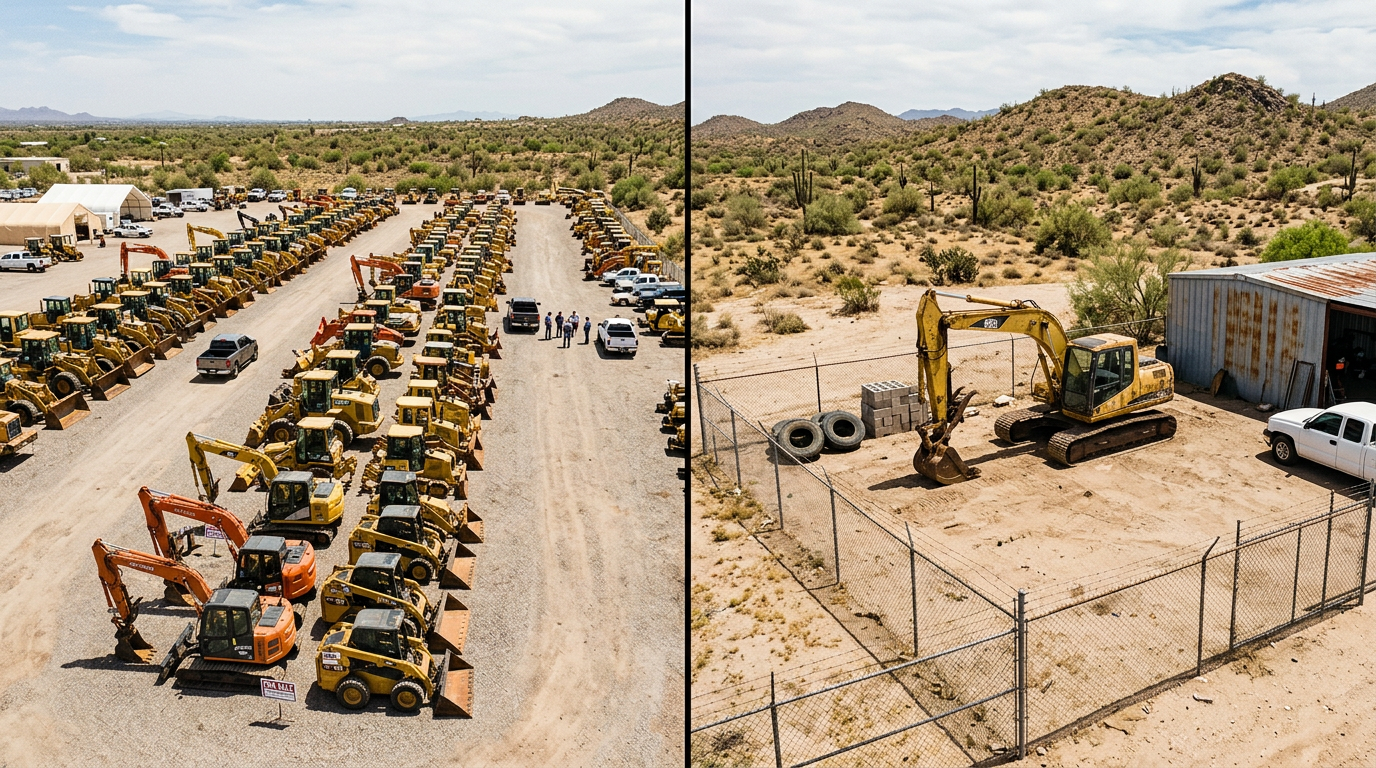
Auctions sell your machine on a set date to the highest bidder. Sellers usually pay a commission or listing fee, and buyers pay a buyer's premium, often 10–20%, on top of the hammer price. Because buyers factor that premium into their bids, the hammer price tends to come in lower. Auctions shine when you need certainty and speed, such as liquidating a fleet. The trade-off is price risk on the day, especially for niche machines or in a soft market. The timeline from consigning to receiving payment is often 30–60 days.
Is a private-party sale worth the effort?
A private sale usually nets the most because there's no middleman taking a cut. The work falls on you: pricing, photos, answering calls, screening buyers, arranging inspections and handling payment and paperwork safely. Private sales work best for in-demand machines like mid-size excavators, compact track loaders and skid steers that sell easily on their own.
How do net proceeds compare?
Take a machine that would sell for $100,000 retail. With 15% consignment, you'd net about $85,000. At auction, buyer premiums often pull the hammer price below retail before seller fees come out. A private sale could net close to the full $100,000, minus your time and any document or inspection costs. These are illustrative numbers. Real results depend on the machine, its condition and the market.
Is there a middle option?
Yes, and that's how EquipMarket is built. You can list your machine for free and sell it yourself with no commission. Or choose a managed listing, where we handle marketing, buyer screening, a free Equipment Condition Report and the Bill of Sale for 6–10%, charged only if it sells. Either way, buyers can apply for financing right from your listing, so more of your inquiries come from people who can actually pay.
Which route should I choose?
- Need cash in a set window and the machine is common: an auction or a managed listing.
- Want the highest net and have time: a private sale through a free listing.
- Don't want to handle calls and paperwork: a managed listing or consignment.
- The machine is specialized or high value: a managed listing or consignment with targeted marketing beats a general auction.
How do I know what my machine is worth before choosing?
Run it through our Equipment Value Estimator, then compare it with live listings in its category, such as wheel loaders or compact track loaders. For a breakdown of fees, see how much it costs to sell heavy equipment.
How do I apply for equipment financing through EquipMarket?
Financing is built into EquipMarket for buyers and sellers. Buyers can pre-qualify through our lending partner, Southend Capital, with one short application. Terms run 24 to 72 months, and you can choose an Equipment Finance Agreement (finance-to-own), a traditional lease, a 10% fair-market-value lease or a $1 buyout lease. Sellers benefit too: a buyer who is already approved can close quickly and pay in full.
Apply for financing now → or compare financing options and estimate a payment. Rates and approval are set by the lender based on your credit, time in business and the machine.