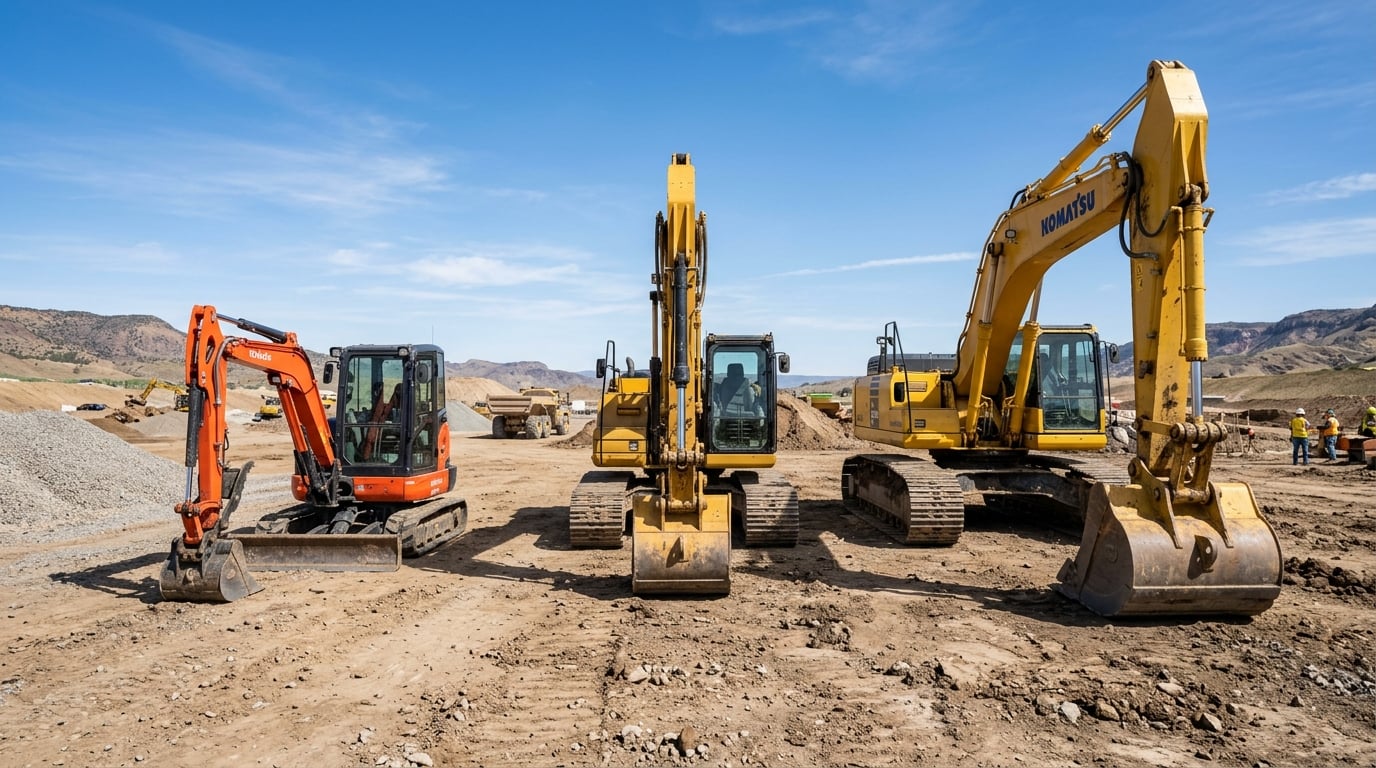
Hitachi Construction Machinery has been manufacturing excavators since 1965 and has built a global reputation for producing durable, fuel-efficient machines. In the United States, Hitachi excavators are known for their smooth hydraulics, operator comfort, and strong resale values. Whether you're a contractor looking for your first Hitachi or a dealer evaluating trade-ins, understanding the ZX series lineup is essential for making informed equipment decisions.
This comprehensive guide covers Hitachi's excavator model range, from compact mini excavators to massive mining-class machines. We'll break down the naming conventions, highlight key features across different size classes, and provide practical buying advice for both new and used Hitachi equipment.
Understanding Hitachi's ZX Naming Convention
Hitachi uses a straightforward naming system for its excavator lineup. The "ZX" prefix stands for "ZAXIS," which has been Hitachi's primary excavator brand since 2001. Following the ZX designation, you'll find a number that roughly corresponds to the machine's operating weight in metric tons.
For example, a ZX350 weighs approximately 35 metric tons, while a ZX210 comes in around 21 metric tons. This makes it relatively easy to compare machine sizes across the lineup. Additional suffixes indicate specific configurations:
- LC (Long Carriage): Extended undercarriage for improved stability
- LCN: Long carriage with narrow track gauge
- H: Heavy-duty configuration for demanding applications
- SL: Super long reach configuration
- -6 or -7: Generation number indicating the model series
Current production models are typically in the dash-6 or dash-7 generation, with newer machines featuring improved fuel efficiency, enhanced operator interfaces, and updated emissions compliance. If you're comparing excavator options across brands, our excavator size guide can help you determine which weight class fits your typical projects.
Hitachi Mini Excavators: ZX17U to ZX85USB
Hitachi's compact excavator range serves contractors working in confined spaces, landscaping, utility installation, and residential construction. These machines typically feature zero or reduced tail swing for working near walls and obstacles.
ZX17U-6 and ZX26U-6
The smallest machines in Hitachi's lineup, the ZX17U-6 and ZX26U-6 are true mini excavators weighing approximately 1.7 and 2.6 metric tons respectively. These compact units feature zero tail swing designs, making them ideal for backyard projects, interior demolition, and tight urban jobsites. Operating weights typically range from 3,700 to 6,000 pounds depending on configuration.
Standard features on these models commonly include rubber tracks, expandable undercarriages, and auxiliary hydraulics for attachment compatibility. Dig depths typically range from 7 to 9 feet, suitable for most residential foundation and utility work.
ZX35U-6 and ZX50U-6
Moving up in size, the ZX35U-6 and ZX50U-6 represent the mid-range compact excavator segment. These machines typically weigh between 7,700 and 11,000 pounds and offer dig depths approaching 11 to 13 feet. The "U" designation indicates ultra-compact or reduced tail swing design.
These models are popular choices for utility contractors, small site development, and municipal work. They're often equipped with quick couplers, multiple auxiliary circuits, and climate-controlled cabs—features that boost productivity on longer projects.
ZX60USB-6 and ZX85USB-6
The ZX60USB and ZX85USB bridge the gap between compact and mid-size excavators. Weighing approximately 13,000 to 19,000 pounds, these short-tail machines deliver the digging performance of larger excavators while maintaining maneuverability in constrained environments.
Contractors frequently choose these models for commercial site work, road construction, and larger utility projects where a true mini excavator lacks the reach or breakout force needed. If you're exploring compact excavator options, you might also want to review our Kubota mini excavator guide for comparison.
Mid-Size Hitachi Excavators: ZX130 to ZX250
Mid-size excavators represent the workhorses of many construction fleets. These machines balance transportability, digging capability, and versatility for a wide range of applications.
ZX130-7 and ZX135US-7
The ZX130 class machines typically weigh around 28,000 to 32,000 pounds and offer dig depths of approximately 18 to 20 feet. The standard ZX130 features a conventional tail swing, while the ZX135US provides reduced tail swing for tighter working conditions.
These excavators are commonly used for residential subdivision development, commercial excavation, and moderate demolition work. Engine output typically falls in the 90 to 100 horsepower range, providing adequate power for most bucket and attachment work.
ZX160LC-7 and ZX180LC-7
Stepping into the 16 to 18 metric ton class, the ZX160LC and ZX180LC offer increased digging depth, reach, and bucket capacity compared to smaller models. Operating weights commonly range from 36,000 to 42,000 pounds.
The "LC" designation indicates a long carriage undercarriage, which provides enhanced stability for lifting and grading operations. These machines are popular for road construction, site grading, and general earthmoving where a larger footprint is acceptable.
ZX210LC-7 and ZX250LC-7
The 20 to 25 metric ton class represents one of the most popular excavator segments in North America. Hitachi's ZX210LC and ZX250LC models typically weigh between 46,000 and 58,000 pounds and deliver dig depths exceeding 22 feet.
These excavators handle a broad spectrum of work including heavy site development, large-scale grading, mass excavation, and moderate quarry applications. Bucket capacities commonly range from 1.0 to 1.5 cubic yards depending on material density and configuration.
For contractors evaluating mid-size excavators, comparing specifications across brands is essential. Our guides on Komatsu PC series excavators and John Deere E-series machines provide useful benchmarks.
Large Hitachi Excavators: ZX300 to ZX490
Large excavators are designed for production earthmoving, heavy demolition, quarry operations, and large infrastructure projects. These machines prioritize digging force, cycle times, and durability over transportability.
ZX300LC-7 and ZX350LC-7
The 30 to 35 metric ton class excavators typically weigh between 66,000 and 80,000 pounds. The ZX300LC and ZX350LC models feature robust undercarriages, high-flow hydraulic systems, and reinforced structures for demanding applications.
Dig depths commonly exceed 24 feet, and bucket capacities typically range from 1.5 to 2.0 cubic yards. These machines are frequently paired with articulated haul trucks for production loading in sand and gravel operations, large commercial developments, and highway construction.
ZX380LC-7
The ZX380LC occupies the 38 metric ton class, offering a balance between the ZX350 and larger ZX490 models. Operating weight typically approaches 85,000 pounds, with engine output commonly in the 270 to 290 horsepower range.
This model is well-suited for contractors who need more production capability than a 35-ton machine but don't require the investment or operating costs of a 50-ton excavator. Applications include large-scale site work, rock excavation, and production loading.
ZX490LC-7 and ZX490LCH-7
At the top of Hitachi's standard construction excavator range, the ZX490 class machines weigh approximately 108,000 to 115,000 pounds. The "H" suffix on the ZX490LCH indicates a heavy-duty configuration with reinforced components for severe-duty applications.
These excavators deliver bucket capacities commonly exceeding 3.0 cubic yards and are designed for quarry operations, large infrastructure projects, and heavy production loading. Engine output typically exceeds 350 horsepower, and transport considerations become significant at this size class.
Mining-Class Hitachi Excavators: EX1200 and Beyond
For mining and large quarry operations, Hitachi offers ultra-class excavators under the EX designation. These machines are purpose-built for maximum production in demanding environments.
The EX1200-7, EX2600-7, and EX5600-7 represent progressively larger mining excavators with operating weights ranging from approximately 250,000 pounds to over 1.2 million pounds. These machines feature massive bucket capacities—commonly 8 to 40 cubic yards—and are designed to load the largest mining haul trucks.
Mining-class excavators require specialized transport, dedicated maintenance facilities, and trained operators. They're typically purchased through direct relationships with Hitachi rather than standard dealer channels.
Key Features Across the ZX Series
Several technologies and design elements distinguish Hitachi excavators from competitors. Understanding these features helps buyers evaluate whether Hitachi machines align with their operational priorities.
TRIAS Hydraulic System
Hitachi's TRIAS (Triple Action Hydraulic System) uses three pumps working in coordination to optimize hydraulic flow based on operating conditions. This system is designed to reduce fuel consumption while maintaining responsive performance. Many operators report smooth, predictable hydraulic response as a distinguishing characteristic of Hitachi machines.
CRES II Cab Design
The CRES II (Comfortable, Roomy, Easy, Safe) cab design emphasizes operator comfort during long shifts. Features commonly include low-noise construction, ergonomic control placement, excellent visibility, and climate control systems. Comfortable operators tend to be more productive and experience less fatigue-related performance decline.
Auto-Idle and Economy Mode
Most current ZX series models include auto-idle functionality that reduces engine speed during non-working periods. Economy mode settings allow operators to prioritize fuel efficiency over maximum performance when conditions permit. These features can meaningfully reduce operating costs over the machine's service life.
ConSite Remote Monitoring
Hitachi's ConSite telematics system provides remote monitoring of machine location, operating hours, fuel consumption, and diagnostic information. Fleet managers can track utilization, schedule maintenance, and identify potential issues before they cause downtime. This technology has become increasingly standard across the industry.
Buying Used Hitachi Excavators: What to Look For
Used Hitachi excavators can offer excellent value, but buyers should approach purchases with appropriate diligence. Here are key considerations specific to the Hitachi lineup.
Generation and Emissions Tier
Hitachi's dash-5, dash-6, and dash-7 generation machines feature progressively updated emissions systems. Earlier Tier 3 machines (commonly dash-5 generation) may face restrictions in certain states or applications. Tier 4 Final machines (dash-6 and dash-7) meet current emissions requirements but include more complex aftertreatment systems that require proper maintenance.
Verify the emissions tier and understand any regulatory implications for your operating region before purchasing.
Undercarriage Condition
Undercarriage components typically represent 40 to 50 percent of an excavator's lifetime maintenance costs. Inspect track chains, rollers, idlers, sprockets, and track shoes for wear. Hitachi undercarriages are generally well-regarded, but replacement costs remain significant regardless of brand.
Hydraulic System Health
Request hydraulic oil samples and test results if available. Hitachi's TRIAS system relies on precise hydraulic function, and contamination or internal wear can compromise performance. Look for smooth, consistent operation across all functions during your inspection.
Service History and Dealer Support
Machines with documented dealer service records typically command premium prices—and often justify them. Hitachi dealer networks provide parts and service support, though coverage varies by region. Verify parts availability for the specific model and generation you're considering.
If you're evaluating a used excavator purchase, our free equipment valuation tool can help you understand fair market pricing for the machine you're considering.
Hitachi vs. Other Major Excavator Brands
Contractors often compare Hitachi excavators against Caterpillar, Komatsu, John Deere, and Volvo. While each brand has strengths, Hitachi machines are frequently praised for several characteristics.
Fuel efficiency: Hitachi's hydraulic system design commonly delivers competitive fuel consumption figures, which can significantly impact operating costs over time.
Operator comfort: The CRES cab design receives consistently positive feedback from operators, particularly on longer shifts.
Hydraulic smoothness: Many operators describe Hitachi hydraulics as exceptionally smooth and responsive, which can improve precision work and reduce operator fatigue.
Resale value: Hitachi excavators generally maintain solid resale values, though market conditions and regional demand influence actual pricing.
For detailed comparisons with other brands, review our guides on Volvo EC series excavators and Caterpillar excavator models.
Common Applications by Model Class
Matching the right excavator size to your typical work improves both productivity and profitability. Here's a general guide to Hitachi model applications:
- ZX17U to ZX50U: Landscaping, residential utilities, interior demolition, backyard excavation
- ZX60USB to ZX85USB: Commercial site prep, larger utility installation, road shoulder work
- ZX130 to ZX180: Subdivision development, commercial excavation, moderate demolition
- ZX210 to ZX250: Site development, mass excavation, production loading (small trucks)
- ZX300 to ZX380: Large commercial projects, quarry operations, highway construction
- ZX490 and larger: Mining, large quarries, major infrastructure projects
Parts and Service Considerations
Hitachi maintains a dealer network across the United States, though coverage density varies by region. Before purchasing, particularly for used equipment, verify that parts and service support are accessible from your base of operations.
Common wear parts like bucket teeth, cutting edges, and filters are generally available through multiple channels. More specialized components—particularly for older generation machines—may require dealer sourcing or longer lead times.
Aftermarket parts are available for many Hitachi models, offering cost savings on certain components. However, critical hydraulic and engine parts are often best sourced through authorized channels to ensure proper specifications and warranty coverage.
Find Your Next Hitachi Excavator
Whether you're adding a compact ZX35U to your fleet or upgrading to a production-class ZX350, understanding Hitachi's model lineup helps you make confident equipment decisions. The ZX series offers options across virtually every size class, backed by Hitachi's reputation for durability and operator-focused design.
Ready to buy or sell Hitachi equipment? Browse current excavator listings on EquipMarket to see what's available, or list your equipment for sale to connect with qualified buyers across the country. Our marketplace makes it easy for contractors and dealers to find the right machines at fair prices.